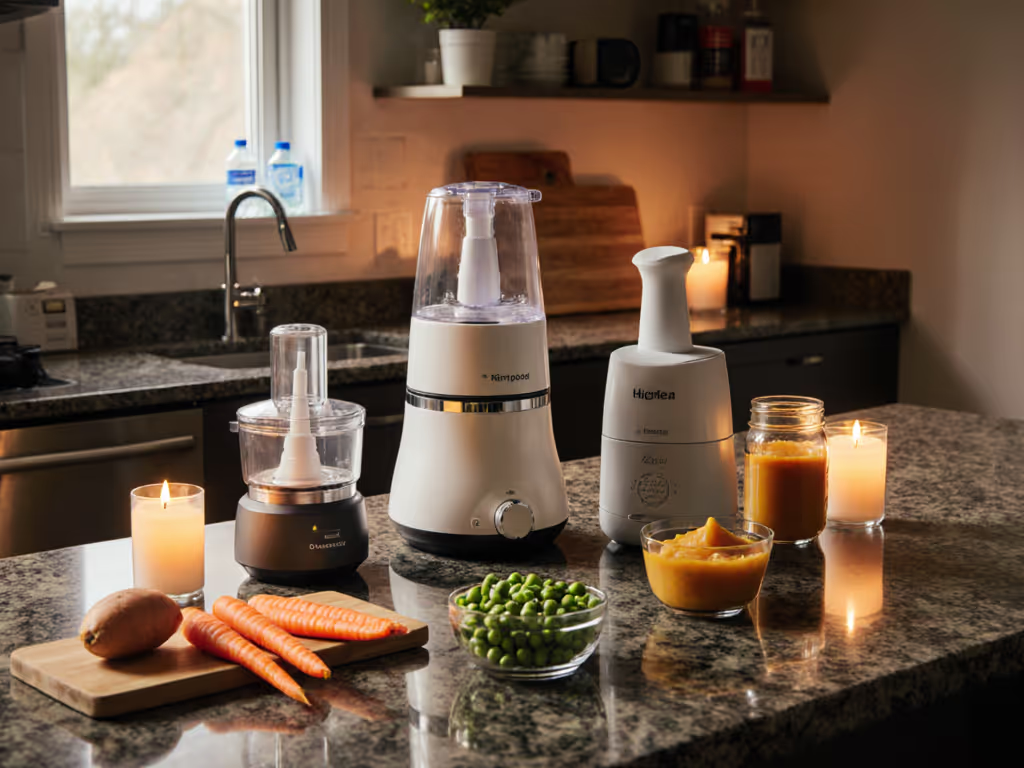
Best Emergency Preparedness Baby Food Makers Compared
14th Jun•14 min read
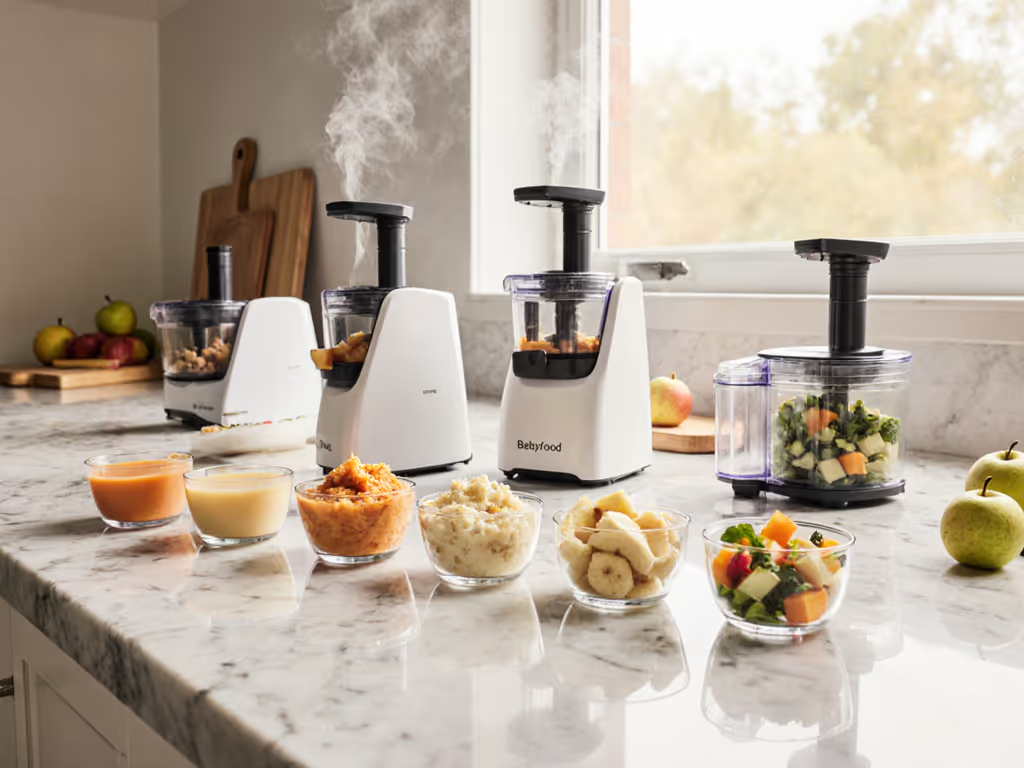
Progressive weaning texture control isn't about perfection, it's about matching what your baby can safely eat at each stage while eliminating the guesswork from home food prep. A good baby food maker with texture consistency options lets you move from smooth purées at 4-6 months to lumpy textures at 8-10 months to soft finger foods by 12 months, all from the same device. The right tool scales with your child, which means one well-chosen machine replaces three gadgets and saves both counter space and your sanity.
The challenge most caregivers face isn't finding a baby food maker, it's finding one that actually delivers on texture progression without requiring you to be a food scientist. Below, I've mapped the questions that matter most, ranked machines against real-world criteria, and given you the clarity you need to choose.
Weaning texture progression moves through distinct stages, and your equipment needs to move with it. At 4-6 months, babies need smooth, pourable purées, no lumps. At 6-8 months, soft lumps appear as babies develop their chewing reflex. By 9-12 months, they're ready for mashed foods with bits they can gum and choke-test swallow. By 18+ months, they're ready for soft table foods.
Why this matters for your machine:
If your blender can't dial back power or offer a "chop" setting, you'll either over-purée and bore an older baby or under-blend and create an unsafe choking hazard. Texture inconsistency, where one spoonful is watery and the next chunky, is a genuine safety risk and a common reason babies reject meals they should be ready for. For stage-by-stage equipment tweaks that prevent these issues, see our texture control guide.
Machines that lock you into one texture (smooth or chunky, no in-between) force you to buy a second device or hand-blend late-stage meals. That's waste.
Ranked by stage-based baby food preparation capability:
1. BÉABA Babycook Neo - Precision Texture Dial
The Babycook Neo is the gold standard for texture progression. It features a glass bowl and stainless steel steaming basket, so no plastic ever contacts the food or steam during heating. Critically, you adjust blending power: smooth purée for month 4-6, transition chop for month 7-9, and chunky texture for month 10+. The timer shuts off steaming automatically, so nothing overcooks (heat plus time reveals truth), and this machine respects both.
Capacity: ~530 mL (about 18 oz per batch). Processing time: ~15 minutes from raw ingredient to finished meal. The stainless steel basket means no mineral deposit buildup from hard water, and all parts that touch food are either glass or medical-grade stainless (no polymer degradation under repeated heat cycles).
Tradeoff: Premium price point, and the smaller bowl means more batches if you're cooking for multiple children.
2. Baby Brezza One Step™ Baby Food Maker Deluxe - Speed + Consistency
The Brezza steams and auto-blends in a single vessel, making over 3 cups of purée in ~10 minutes. For an in-depth breakdown of presets, consistency, and real-world timing, read our Baby Brezza One Step Deluxe review. It's the first all-in-one specifically designed for babies, and that focus shows: the auto-blend feature ensures uniform texture throughout the batch.
The advantage: speed and consistency. The disadvantage: less granular texture control. It's optimized for smooth infant purées and early lumpy stage, but if you need finer texture tuning for very picky eaters or late-stage toddlers transitioning off baby food, you'll need a secondary blender. The set includes three reusable pouches and a funnel, which accelerates batch prepping and storage, but pouches themselves introduce plastic-food contact at the final stage (though these are typically polypropylene-based, lower-risk under cool storage).
3. Nutribullet Baby Steam + Blend - Versatility Over Simplicity
The Nutribullet Baby separates steaming from blending, giving you manual control over texture, you decide when to stop the blend cycle. This is excellent for texture experimentation and for older siblings who want smoothies or nut butters. The trade-off: more steps, more parts, and more cleanup.
Best for families who plan to use the device beyond the baby stage and who prefer active control over preset automation.
4. Babymoov Duo Meal Station XL - Batch Cooking Champion
The Duo Meal Station XL prioritizes capacity (~1100 mL, nearly 37 oz per cycle) and a dedicated storage bowl system. If you're batch-cooking for twins, a crèche meal plan, or a family of three under age 3, the larger capacity reduces prep frequency. Parents of multiples can compare capacities and workflow in our twin-friendly baby food maker guide. Texture control is solid but less nuanced than the Babycook Neo.
Best for high-volume households where the time savings on prep frequency outweigh the loss of fine texture tuning.
If you have access to an in-store demo or a friend's machine, run this purée consistency testing checklist: