African Baby Food Recipes: Batch-Cook Blueprint
28th Apr•7 min read
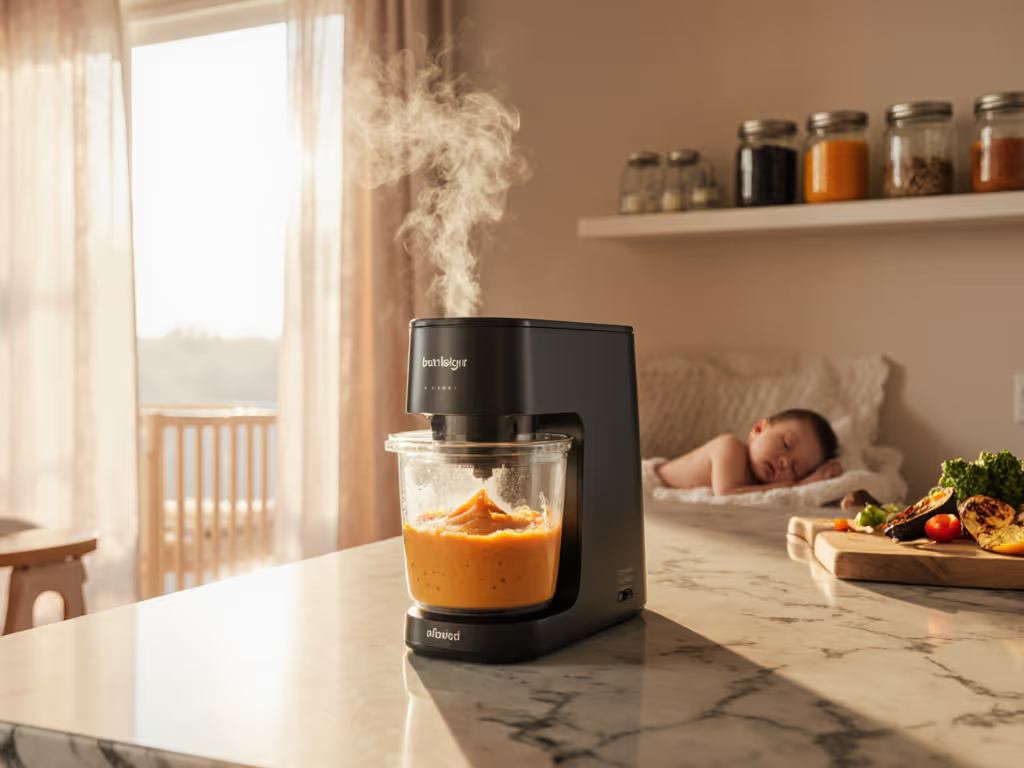
When your baby has reflux, every meal prep decision carries extra weight (not just nutritionally but logistically). You're navigating reflux-friendly baby food preparation with a machine that can't wake a sleeping infant, all while potentially holding or wearing your baby with one arm. The right baby food maker for acid reflux isn't just quieter; it's built around the reality that one hand free is the design brief.
Reflux adds a specific constraint to feeding: texture matters. Babies with reflux often do better with smoother purees that move through their system more predictably, and foods prepared at the right temperature and consistency can genuinely reduce discomfort. But here's the catch: most baby food makers are loud enough to derail nap schedules, and many lack the precision controls that reflux-safe texture requires.
You're also managing something most feeding guides skip over: the one-handed reality of caregiving. Whether you're holding your baby during prep, wearing them in a carrier, or recovering from surgery or postpartum limitations, true one-handed operation isn't a nice-to-have; it's a safety essential. A blender that demands both hands to latch the lid is a blender that sits unused.
Good design reduces friction and risk, so feeding fits life, not vice versa.
Add reflux-specific prep into this mix, and the stakes climb. You need a machine that operates quietly enough to protect sleep, precisely enough to dial in the texture your baby tolerates, and intuitively enough that you can load, blend, and rinse without setting the baby down.
Decibel levels aren't just a comfort metric; they're a practical boundary between a tool that fits your rhythm and one that disrupts it. See our lab-tested low-noise baby food makers to choose models that stay quiet during naps. Most standard blenders operate at 80-88 decibels during a 30-second blend cycle. That's roughly the volume of a garbage disposal or heavy traffic. Repeated cycles during batch cooking can cut into or derail the 45-90 minute nap window many reflux babies manage.
But loudness compounds with another factor: consistency of operation. A machine that's quiet one day but louder the next (often due to motor strain or gasket wear) creates unpredictability. You stop trusting it as a nap-time tool. This is where the connection between reliable design and true quietness emerges: a well-engineered machine maintains its operating signature because the motor isn't overworked and vibration is dampened by design, not accident.
Reflux-safe food preparation isn't just about smoothness. It's about three interconnected factors:
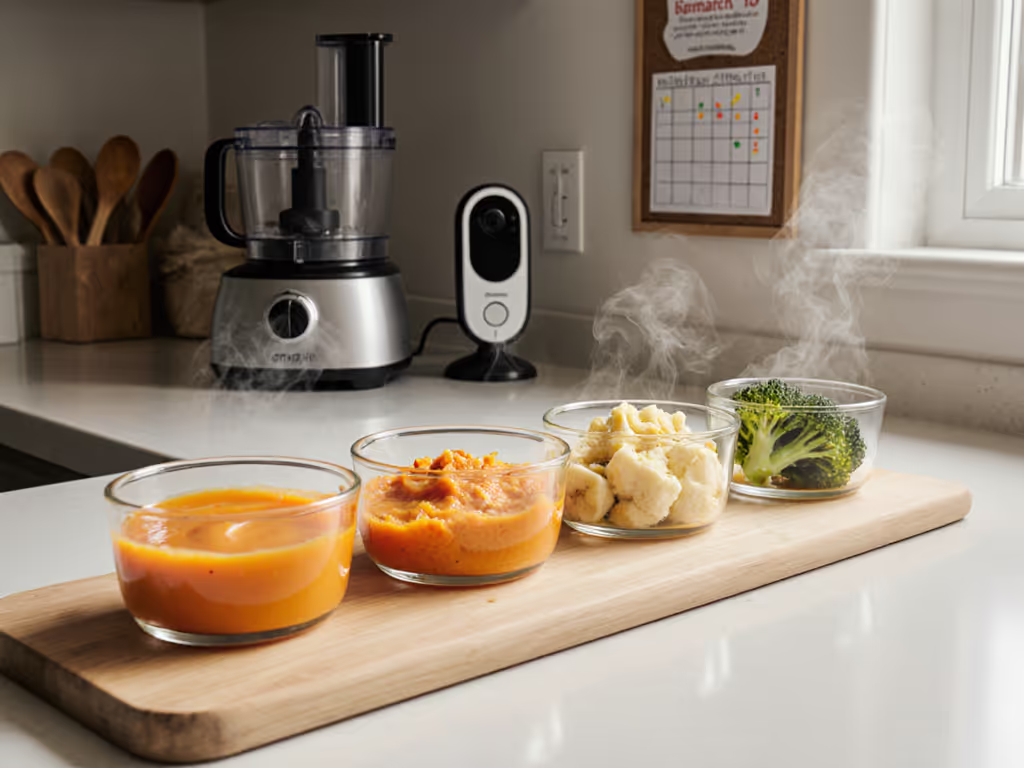
Consistency: Reflux babies typically tolerate purees smoother than traditional Stage 1 - think runny yogurt rather than thick pudding. This isn't one-size-fits-all; some babies need stage-appropriate thickness, others tolerate thinner textures better. A maker with variable blending settings (not just on/off) lets you test what your baby settles on without overworking vegetables.
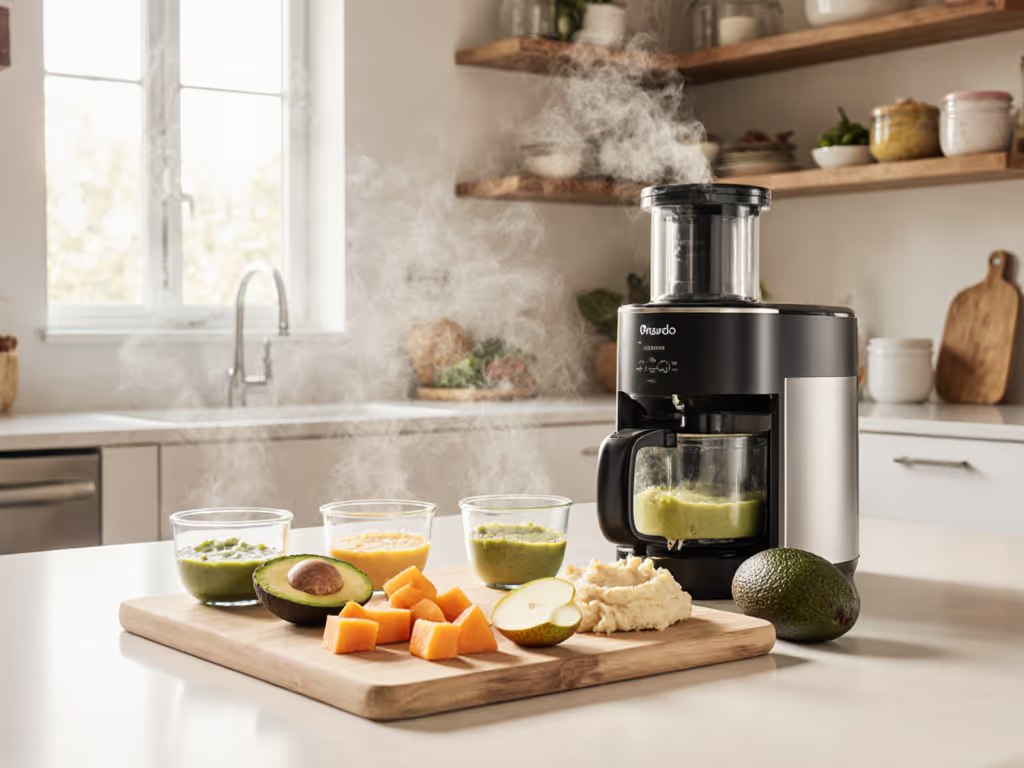
Temperature control: Warm food moves through the system differently than cold. Many acid-neutralizing baby food techniques involve gentle heating, and a maker that steams and blends in sequence (without cooling the food between steps) maintains that benefit. Transferring from a steamer to a separate blender means temperature loss and extra handling steps.
Batch consistency: Reflux babies benefit from routine. If purees vary in texture batch to batch, mealtimes become unpredictable. A maker with repeatable settings and a bowl that doesn't vibrate or shift mid-cycle supports this reliability.
I reviewed machines with a baby sleeping on my shoulder, noting which ones actually worked when one arm wasn't available. If one-hand operation is your top priority, compare our top one-handed baby food makers verified for true one-arm use. The winners had these traits:
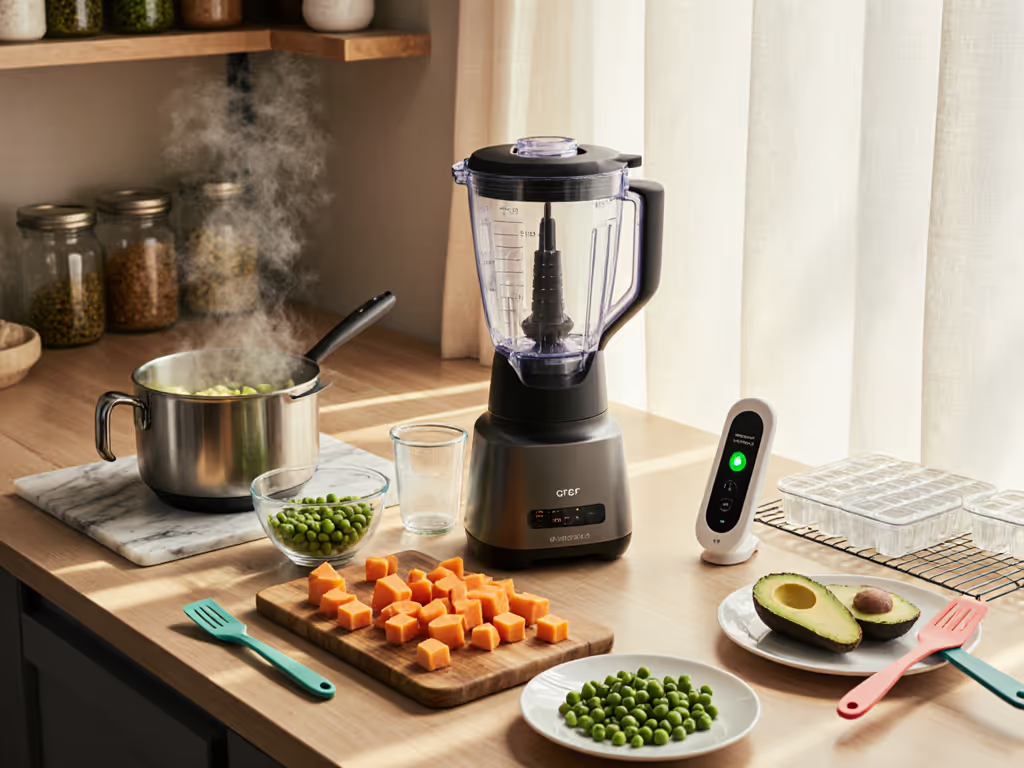
The workflow that works looks like this:
Total active time: roughly 10-12 minutes of hands-on work spread across a 35-50 minute cycle. The machine does most of the work; you manage flow and transitions.
Reflux-safe baby food textures depend on both what you blend and how you blend it. Here are the techniques that matter:
Raw-to-cooked smoothness: Blend cooked vegetables or fruits until they're smoother than usual, but don't over-blend (heat + extended blending can break down nutrients). A variable-speed machine lets you stop before the point of oxidation and over-processing.
Liquid calibration: Reflux babies often benefit from purees that flow easily. Add cooking liquid (broth, water from the steaming bowl) gradually, blending in stages. Start at 75% of the vegetable mass, then adjust. A machine with a graduated bowl helps you see where you are without guessing.
Batch sizes: Smaller batches freeze and thaw more predictably, reducing texture drift. Aim for 2-3 ounce portions in ice-cube trays, then transfer to labeled containers. This also means more frequent use of your maker, which brings motor-reliability into focus.
Cleanup is where many machines fail working parents. Use our quick-clean baby food maker guide to set a fast, mold-preventing routine. A maker that claims to be "easy" but has a fiddly motor base or non-detachable seals adds mental load: you skip cleaning properly, gaskets harbor mold, and in a few months the machine smells off and that taste gets into your food.
The one-handed cleanup test:
One-handed cleanup means running water over pieces in a strainer held in one hand, placing items into the dishwasher basket with the other, and having a drying rack or clean towel ready. If the machine requires two hands to detach the blade or involves a fussy ring-and-twist gasket, you'll resent it within a week.
When evaluating a machine for your reflux-safe workflow, prioritize these measurable checks:
Decibel rating: Look for 70-75 dB during blend cycles. Machines rated above 80 dB will likely wake a light sleeper. Ask manufacturers for real-world testing data, not just specs. Decibel tests should come from independent sources, not marketing materials. For stage-by-stage noise data, see our nap-safe prep stages test.
Motor consistency: Read reviews noting whether the machine sounds the same after 3-6 months of regular use. A motor that gradually gets louder is a motor that's wearing out.
Vibration isolation: Place a light object (like a wooden spoon) on top of the machine during a blend cycle. If it jumps or chatters, vibration is excessive. That vibration will transfer noise into your countertop and amplify sound throughout the kitchen.
Base stability: Test the suction feet or grip feet on your actual counter surface, not the demo counter. Some machines stick on granite and slip on laminate. A machine that creeps during operation is loud because it's working against friction, not just blending.
Designed for one hand, tested during nap-roulette, approved under pressure.
That's the ethos that bridges quiet machines and reflux-safe prep. The machine that works is the one that vanishes into your routine, not one that commands focus and both hands.
Reflux-friendly prep doesn't have to be loud, complicated, or two-handed. The machines that win are the ones that reduce friction: quiet enough to honor your baby's sleep, simple enough to use with one arm, and precise enough to dial in the texture your baby's digestion rewards. Start with the quietness test, then layer in the one-handed workflow. The rest follows.